

Seafood Packaging in the Middle East Enters a New Era of Freshness, Convenience, Eco-Friendly Smarter, Greener, and Built for Growth Solutions
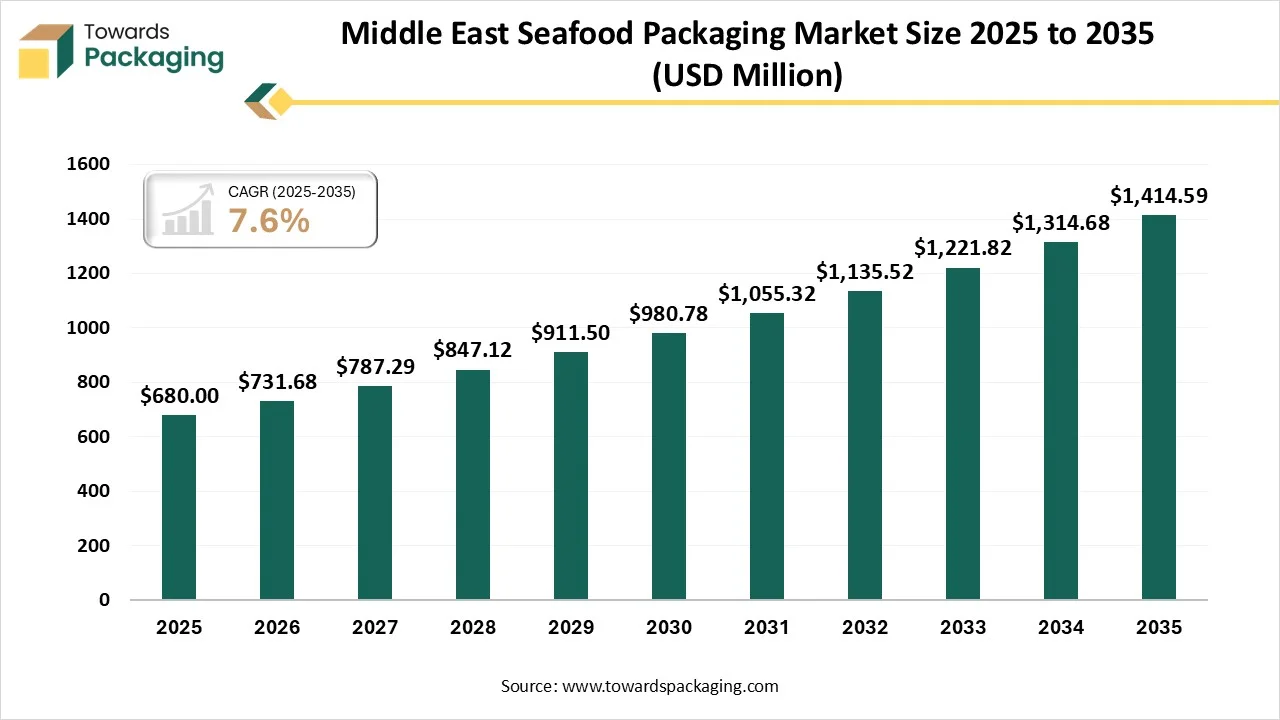
According to a recent analysis by Towards Packaging, the global Middle East seafood packaging market is projected to expand from USD 731.68 million in 2026 to USD 1,414.59 million by 2035, recording a CAGR of 7.6% between 2026 and 2035.
Ottawa, March 02, 2026 (GLOBE NEWSWIRE) -- The global Middle East seafood packaging market size stood at USD 680 million in 2025 and is projected to reach USD 1414.59 million by 2035, according to a study published by Towards Packaging, a sister firm of Precedence Research.
Request Research Report Built Around Your Goals: sales@towardspackaging.com
What is Meant by Seafood Packaging?
Seafood packaging refers to the specialized materials and technologies, such as vacuum-sealed bags, modified atmosphere packaging (MAP), and insulated containers, used to store, protect, and transport fish and shellfish. It is essential for preserving freshness, preventing contamination, and reducing oxidation and spoilage from the time of processing until consumption. Seafood packaging is crucial for maintaining the quality of fresh, frozen, and processed seafood.
Private Industry Investments for Seafood Packaging:
- DS Smith's DryPack: This investment focuses on a 100% recyclable, leak-proof cardboard alternative to plastic foam for transporting fresh fish.
- Royal Greenland’s Plastic-Free Boxes: A major investment into water-based barrier coatings that allow frozen seafood boxes to be recycled directly with paper waste.
- Ocean 14 Capital’s Portfolio: This private equity firm directs millions into "blue economy" startups that develop biodegradable and circular packaging materials specifically for marine proteins.
- Kings Infra Ventures Expansion: A strategic investment in specialized B2B and B2C packaging infrastructure to improve the traceability and shelf-life of premium aquaculture products.
-
Cruz Foam’s Scalable Bio-Packaging: Private venture backing has enabled the production of chitin-based foam (derived from shrimp shells) to create a circular packaging loop for the seafood industry.
Middle East Seafood Packaging Market Trends
- Demand for Smart Packaging: To combat high temperatures, the region is investing in active and intelligent packaging like time-temperature indicators and QR codes for real-time freshness tracking.
- Sustainability Regulation Compliance: Driven by regional initiatives like the UAE Circular Economy Policy, there is a rapid shift from single-use plastics to recyclable and biodegradable fiber-based solutions.
What are the Latest Key Trends in the Middle East Seafood Packaging Market?
- Rising Demand for Convenience: Increased demand for ready-to-eat and ready-to-cook packaging solutions, driven by busy lifestyles and the growth of e-commerce.
- Sustainability Focus: Growing pressure for sustainable, biodegradable, and recyclable alternatives, such as paper-based packaging, to reduce environmental impact.
-
Dominance of MAP Technology: Modified Atmosphere Packaging is crucial for maintaining freshness in the region's warm climate, reducing spoilage during transport.
What is the Potential Growth Rate of the Middle East Seafood Packaging Industry?
The Middle East seafood packaging industry is experiencing robust growth, fueled by increasing seafood consumption, the growth of modern retail/e-commerce, and the need for advanced, sustainable, and protective packaging, particularly for chilled and frozen products. GCC countries are leading the demand, supported by increased local aquaculture production, high per capita consumption, and a shift towards organized retail and e-grocery delivery.
Get All the Details in Our Solutions - Access Report Sample: https://www.towardspackaging.com/download-sample/5979
Regional Analysis:
Saudi Arabia Seafood Packaging Market Trends
Saudi Arabia dominates the Middle East seafood packaging industry, driven by expanding aquaculture capacity, increased health-conscious consumer spending, and the growth of retail and e-commerce food platforms. Saudi Arabia is the largest market in the Middle East for seafood packaging, with high demand for fresh and processed fish products. A significant trend is the shift towards sustainable, recyclable, and eco-friendly materials, driven by government regulations aimed at reducing plastic waste.
The UAE Seafood Packaging Market Trends
The UAE and broader Middle East seafood packaging industry are experiencing robust growth, driven by rising seafood consumption, increased demand for sustainable materials, and advanced technology adoption like Modified Atmosphere Packaging (MAP). The market is rapidly expanding, with a strong focus on plastic alternatives (glass/bio-plastics) and smart packaging to enhance freshness. The UAE is a major, rapidly growing hub, particularly for premium, imported seafood.
More Insights of Towards Packaging:
- Canada Multilayer Flexible Packaging Market Size and Segments Outlook (2026–2035)
- U.S. Pharmaceutical Packaging Services Market Size and Segments Outlook (2026–2035)
- Polypropylene Foam Trays Market Size and Segments Outlook (2026–2035)
- North America Flexible Plastic Packaging Market Size, Trends and Competitive Landscape (2026–2035)
- PET Shrink Film Market Size, Segments and Competitive Analysis 2025-2035
- Recycle-Ready Packaging Market Size, Trends and Regional Analysis (2026–2035)
- PVDC-Free Packaging Solution Market Size, Trends and Competitive Landscape (2026–2035)
- Thermoformed Trays Market Size, Trends and Segments (2026–2035)
- Ready-To-Drink Packaging Market Size, Trends and Regional Analysis (2026–2035)
- Modified Atmosphere Packaging (MAP) Market Size and Segments Outlook (2026–2035)
- North America Healthcare Flexible Packaging Market Size, Demand and Trends Analysis
- North America Amber Glass Packaging Market Size, Trends and Regional Analysis (2026–2035)
- Automated Bagging Solutions Market Size and Segments Outlook (2026–2035)
- U.S. Packaging Market Size, Trends and Segments (2026–2035)
- Pharmaceutical Packaging Laminates Market Size, Trends and Segments (2026–2035)
- Barrier Coatings for Flexible Packaging Market Size, Trends and Segments (2026–2035)
- Contoured Bottles and Containers Market Size and Segments Outlook (2026–2035)
- Diaper Packaging Market Size, Trends and Competitive Landscape (2026–2035)
- Pouch Materials for Pharmaceutical Market Size and Segments Outlook (2026–2035)
- Polypropylene Containers Market Size, Trends and Segments (2026–2035)
Segment Outlook
Material Insights
How Did Plastic Segment Dominate the Middle East Seafood Packaging Market?
The plastic segment dominated the market in 2025, due to its excellent barrier properties, durability, and cost-effectiveness in protecting perishable seafood. Key plastics like PET, PP, and PE are essential for maintaining quality and extending shelf life in the region's climate. The surge in demand is fueled by the expansion of supermarkets, increased frozen food consumption, and the need for reliable cold chain logistics.
Saudi Arabia held a major share of the regional market, which is seeing rapid growth in modified atmosphere packaging.
The paper and paperboard segment is projected to grow at the fastest rate in the market for the forecast period, driven by rising demand for sustainable, eco-friendly, and recyclable alternatives to plastic. This growth is accelerated by government-led initiatives against single-use plastics and the need for improved moisture-resistant coatings for seafood. Paper-based materials are increasingly used for secondary and outer packaging, such as cartons, boxes, and trays for transporting seafood.
Packaging Technology Insights
Which Packaging Technology Segment Dominates the Middle East Seafood Packaging Market?
The modified atmosphere packaging segment dominated the market in 2025, driven by the need to extend shelf life for fresh/chilled products, with plastic remaining the primary material. MAP leads due to its ability to maintain the freshness, color, and texture of seafood, crucial for long distribution chains. The growth is propelled by increased consumption of pre-packed, healthy, and ready-to-eat seafood, alongside advancements in sustainable, recyclable, and bio-based MAP materials.
The retort packaging segment is projected to grow at the fastest rate in the market for the forecast period, driven by the increasing demand for shelf-stable products, aquaculture growth, and rising consumer demand for convenience, ready-to-eat products, and the expansion of the regional seafood processing industry. The shift toward on-the-go meals, coupled with the need for long-term preservation without refrigeration, makes retort pouches a top choice for seafood packaging.
Application Insights
How Did the Fresh and Chilled Seafood Segment Dominate the Middle East Seafood Packaging Market?
The fresh and chilled seafood segment dominated the market in 2025, driven by advanced technologies like modified atmosphere packaging (MAP), skin packaging, and shrink wrapping to maintain quality. This dominance is supported by high consumer demand for fresh products and improved cold chain logistics. The market is driven by increasing consumer awareness regarding health, rising disposable income, and a growing population of expatriates.
The processed & Ready-to-Eat segment is projected to grow at the fastest rate in the market for the forecast period, driven by rising demand for convenient, high-quality, and protein-rich food options, alongside increasing disposable incomes and urbanization. This segment is anticipated to grow significantly due to a shift towards ready-to-cook and frozen seafood, with Saudi Arabia leading the regional market expansion.
Seafood Type Insights
Which Seafood Type Segment Dominates the Middle East Seafood Packaging Market?
The fish segment dominated the market in 2025, driven by high local consumption of staples like salmon, hamour, and grouper. This segment relies on advanced, sustainable packaging solutions, including flexible and modified atmosphere packaging (MAP), to maintain freshness. Deep-rooted cultural traditions, high demand for fresh, locally sourced fish, and increased adoption of modern, hygienic packaging in retail and foodservice drive this dominance.
The crustaceans segment is projected to grow at the fastest rate in the market for the forecast period, driven by high demand for convenient, processed, and premium frozen products in the region. This growth is supported by increasing imports in the UAE and Saudi Arabia. The frozen, raw-frozen, and processed crustaceans market is growing significantly due to the high demand for protein-rich, ready-to-eat seafood.
Recent Breakthroughs in the Middle East Seafood Packaging Industry
In January 2026, United Breweries launched Kingfisher Smooth in India, a premium lager targeting young urban consumers. The new brand features a honey-coloured liquid and updated packaging to highlight its smooth, less bitter taste.
In October 2025, Finnish foodtech firm Finnforel launched its premium rainbow trout brand, LoHi, in the UAE, utilizing land-based farming technology and packaging designed for convenience. The launch addresses the UAE's high seafood consumption and growing demand for sustainable nutrition, with plans to expand retail availability after an initial debut at LuLu Hypermarket stores.
Top Companies in the Middle East Seafood Packaging Market & Their Offerings:
- Amcor plc: Supplies high-barrier flexible films and recyclable paper-based trays designed to extend shelf life.
- Sealed Air Corporation: Specializes in CRYOVAC® vacuum skin packaging and shrink bags that ensure maximum food safety.
- Mondi Group: Offers heavy-duty, water-resistant corrugated boxes and flexible pouches for transport and retail.
- Berry Global Inc.: Manufactures durable HDPE plastic trays and high-performance stretch films for frozen products.
- DS Smith Plc: Produces sustainable, leakproof fiber-based boxes designed specifically for seafood air freight.
- Swiss Pac UAE: Provides versatile retail solutions like vacuum pouches and stand-up bags with custom printing.
- Amber Packaging Industries: Delivers specialized high-barrier laminate pouches tailored for regional fish and shrimp brands.
- ENPI Group: Serves as a regional "one-stop-shop" for flexible films, labels, and rigid seafood containers.
- Huhtamaki Oyj: Manufactures puncture-resistant laminates and sustainable molded fiber trays for various seafood formats.
- ULMA Packaging: Focuses on automated packaging machinery, including tray sealers and thermoforming systems for processing lines.
-
Coveris Holdings S.A.: Supplies high-performance flexible packaging that optimizes shelf-life while reducing plastic waste.
Segment Covered in the Report
By Material
- Plastic (PE, PP, PET, etc.)
- Paper & Paperboard
- Metal (Cans/Tins)
- Others (Glass, Wood, Bio-materials)
By Packaging Technology
- Modified Atmosphere Packaging (MAP)
- Vacuum Packaging
- Retort Packaging
- Others (Active & Smart Packaging)
By Application
- Fresh & Chilled Seafood
- Frozen Seafood
- Processed & Ready-to-Eat
- Dried/Canned
By Seafood Type
- Fish (Salmon, Tuna, Whitefish)
- Crustaceans (Shrimp, Prawns, Lobster)
- Mollusks & Others
Invest in Our Premium Strategic Solution:
Request Research Report Built Around Your Goals: sales@towardspackaging.com
About Us
Towards Packaging is a global consulting and market intelligence firm specializing in strategic research across key packaging segments including sustainable, flexible, smart, biodegradable, and recycled packaging. We empower businesses with actionable insights, trend analysis, and data-driven strategies. Our experienced consultants use advanced research methodologies to help companies of all sizes navigate market shifts, identify growth opportunities, and stay competitive in the global packaging industry.
Stay Connected with Towards Packaging:
- Find us on Social Platforms: LinkedIn | Twitter | Instagram | Threads
- Subscribe to Our Newsletter: Towards Sustainable Packaging
- Visit Towards Packaging for In-depth Market Insights: Towards Packaging
- Read Our Printed Chronicle: Packaging Web Wire
-
Get ahead of the trends – follow us for exclusive insights and industry updates:
Pinterest | Medium | Tumblr | Hashnode | Bloglovin | LinkedIn – Packaging Web Wire | Globbook | Substack | Bluesky | Justdial | Crunchbase | TrustPilot | Bizcommunity - Contact: APAC: +91 9356 9282 04 | Europe: +44 778 256 0738 | North America: +1 8044 4193 44
Our Trusted Data Partners
Precedence Research | Towards Healthcare | Towards Food and Beverages | Towards Chemical and Materials | Healthcare Webwire | Packaging Webwire | Precedence Research Insights
Towards Packaging Releases Its Latest Insight - Check It Out:
Cohesive Packaging Market Size, Trends and Competitive Landscape (2026–2035)
Recyclable mono-material PE Market Size, Trends and Competitive Landscape (2026–2035)
Sustainable Wipe Packaging Market Size and Segments Outlook (2026–2035)
Tobacco Packaging Market Size and Segments Outlook (2026–2035)
Europe Pharmaceutical Packaging Materials Market Size, Trends and Competitive Landscape (2026–2035)
North America Tin Cannabis Packaging Market Size and Segments Outlook (2026–2035)
Semi-Automatic Stretch Wrappers Market Size, Trends and Competitive Landscape (2026–2035)
Cut Flower Packaging Market Size, Trends and Segments (2026–2035)
Clear Plastic Film Market Size, Trends and Competitive Landscape (2026–2035)
Edible Packaging Market Size, Trends and Regional Analysis (2026–2035)
Glass Packaging Market Size, Trends and Regional Analysis (2026–2035)
U.S. Rigid Thermoform Plastic Packaging Market Size, Trends and Segments (2026–2035)
Canada Plastic Packaging Market Size, Trends and Regional Analysis (2026–2035)
Packaging in Supply Chain Management Market Size, Trends and Segments (2026–2035)
North America Food Packaging Market Size, Trends and Segments (2026–2035)
North America Blister Packaging Market Size, Trends and Regional Analysis (2026–2035)


Legal Disclaimer:
EIN Presswire provides this news content "as is" without warranty of any kind. We do not accept any responsibility or liability for the accuracy, content, images, videos, licenses, completeness, legality, or reliability of the information contained in this article. If you have any complaints or copyright issues related to this article, kindly contact the author above.
